More
    Home Blog Page 87

    3 Brilliant but Forgotten GBA Game Boy Advance Titles

    0

    When we say Game Boy Advance, how many of you think about Mario and Pokemon games? Probably all of you. But, there were so many games for this device and not all of them were popular, despite the fact they were brilliant developments. Now we will reveal 3 games that deserve your full attention and should be played even in 2019. If you want to play them, download GBA emulators and start your new quest.


    1. Tactical Command


    Tactical Command was superb game for Game Boy Advance that deserves your full attention. It was developed by one of the experts for turn-based games, Julian Gollop and it is the member of Rebelstar games. In general, this game tells a story in which you will have to fight allies with gray skin who will try to take over the planet Earth. The original game started its life back in the 80s, but Tactical Command was one of the best sequels.

    It was placed in the shadow of Advanced Wars and precisely this is the reason why it was considered as a less-popular game. Anyway, the game offers an interesting story, plenty of features and it is very appealing to play for hours. We also liked the sounds and they make the game even better.


    1. Drill Dozer


    Drill Dozer is a child of Ken Sugimori and Game Freaks, the same ones who developed Pokemon games. Of course, Drill Dozer wasn’t as popular as the Pokemon game, but it is still an impressive development that put a smile on millions of people. It is still considered as one of the rarest games that deserve your full attention. In the game, you will have to control Jill a girl in an advanced suit with a drill mounted on the front. She will drill through various materials and complete series of missions.

    Even today, this game is impressive to play. Sadly, there are no sequels which were probably even more popular than the original game. The gaming interface is simple, fun and appealing for all possible gamers. We highly recommend you to try out this game today with the help of emulators.


    1. Scurge: Hive


    The only reason why the Scurge: Hive game wasn’t very popular is the fact it was released back in 2006 when the Game Boy Advanced started to lose its popularity. Today, this is one of the most desirable games and it is extremely difficult to find a copy. If you do, try it and you will see why it has been one of the most appealing games for GBA in the last couple of years. The user interface is excellent and the attention of details is even better.

    The game allows for you to move different objects, to fight aliens and to move through different locations. It isn’t the real RPG game, but more complex development which can be noticed in several other games from the same era. The sounds and the possibilities are still considered as the best GBA had to offer and the game itself is very addictive.


    Enjoy playing GBA games

    There is the whole world of brilliant, yet forgotten Game Boy Advance games that were masterpieces but launched at the wrong time. These 3 are spectacular in any way possible and they are still considered as the best of the best games for the popular device. If you have an opportunity, check them out and see why they are considered as a rare treasure of the online world. Due to the fact they are great, yet rare, we can even say that these 3 games are pieces of art.

    Top 13 Quick Responsive Web Design Tips and Tricks for 2019


    In Web Design Services, Responsive web design is the more difficult thing nowadays. There are several tools which help you to make and test your models and guarantee you make the best client encounter. In this article, we talk about the best resources that will guide you in making your websites function admirably and look incredible on any gadget.


    01. The guidelines of responsive web typography

    Responsive web typography is one of the hardest parts for this you need both design knowledge and technical know-how. However, anyway dubious it may be, failing to understand the situation isn’t an alternative since typography is the foundation of web design. Pursue these design standards and handy answers for hitting the nail on the head.


    02. Design a responsive site with em-based measuring

    By utilising em units for text style measuring, you can design components on the page that react naturally should the text dimension change. At that point, with a clever trap for a responsive text dimension, you can create a whole page that changes dynamically dependent on the viewport width of the program. Figure out how to use the ‘relative’ conduct of ems to make designs that are versatile and responsive.


    03. Need guides: a content-first option to wireframes

    Wireframes might be the most broadly utilised tool for designing websites, applications and other digital interfaces, yet they’re not without their downsides, especially with regards to responsive design. Here Heleen van Nues and Lennart Overkamp acquaint their favoured option with wireframes: need guides, which contain content and components for a mobile screen, arranged by the progressive system through and through and without design details.


    04. The ace’s guide to responsive web design

    Composed by Justin Avery, caretaker of the Responsive Design Weekly bulletin, this guide from net magazine takes web stars through the fundamentals up to the further developed responsive web design techniques.


    05. Step by step instructions to design responsive and gadget freethinker shapes

    Structures are a standout amongst the most critical components in any digital product design, and whether you require an information exchange stream or a multi-see stepper, you have to design it so that’ll work viably on mobile devices similarly just as on the work area. Here are the means by which to do it, finish with supportive tips on the most proficient method to utilise Flexbox.


    06. Make a responsive format with CSS Grid

    CSS Grid Layout is developing in program bolster each day, and keeping in mind that it is anything but a trade for Flexbox or notwithstanding for buoys, when utilised in combination with them it’s an incredible method to make new and energising responsive layouts. Pursue this well-ordered guide to building a responsive portfolio site employing Grid.


    07. The web designer’s guide to Flexbox

    Have you begun utilising Flexbox yet? In this instructional exercise, Wes Bos gives a comprehensive guide genuinely ideas that will provide you with a strong comprehension of all that you have to get to grasps with this powerful tool.


    08. Codrops Flexbox reference

    This entire guide to Flexbox is composed by Sara Soueidan, a creator who is eminent for her capacity to clarify ideas such that’s anything but difficult to pursue without rationing subtlety. The Codrops guide is routinely updated, so it’s an extraordinary resource to come back to when you require it.


    09. Stacks: Flexbox for Sketch

    Stacks, some portion of the Auto Layout plugin, give an approach to you to utilise Flexbox innovation inside Sketch, without using CSS. This article clarifies how you can make utilisation of this powerful procedure for simple responsive design.


    10. An intensive lesson in technical RWD

    Composing on the Treehouse blog, Jerry Cao has consolidated a ton of helpful data into a moderately short, readable article.


    11. Make flexible layouts with Susy and Breakpoint

    If you would prefer not to utilise a framework to manufacture your responsive site, these Sass expansions are a decent option, each with their qualities. They’ll deal with the responsive maths for you so you can concentrate on design.


    12. The most effective method to make responsive guides in Adobe XD

    In case you’re quick to experiment with Adobe Experience Design (XD), here’s a decent instructional exercise to kick you off. It incorporates a video exhibit that takes you through each click of the procedure.


    13. CSS at BBC Sport

    This is not an instructional exercise as such, yet there’s a great deal of learning here. In this post, the first of a two-section arrangement, frontend designer Shaun Bent takes us on a point by point voyage through how CSS is done at BBC Sport. They’ve figured out how to keep the CSS foundation of this large site under 9kb, and it’s interesting to perceive how that has been finished.

    Author Bio –

    Denny Kelly is a Marketing Manager at AIS Technolabs which is Web design and Development Company, helping global businesses to grow. I would love to share thoughts on sharepoint web development and Game Design Development etc.

    For More:

    LinkedIn: https://www.linkedin.com/company/ais-technolabs

    Twitter: https://twitter.com/aistechnolabs

    Facebook: https://www.facebook.com/aistechnolabs

    Google+: https://plus.google.com/+AisTechnolabs

    How to Protect your Brand’s Reputation from the Negative Reviews

    0

    No matter how popular, friendly, or reputable your brand may be, it is impossible to please everyone. Negative reviews are sure to happen. It’s just part of the game. Like it is with any game, however, the right strategy can give you the right edge.

    The way companies deal with negative reviews speaks volumes about them. What are you communicating with the way you respond? Today, we’re going to look at a few successful strategies that can turn bad reviews into the good press for any brand. Those strategies revolve around a few key themes:

    • Understanding the complaint
    • Addressing the underlying pain point(s)
    • Not getting defensive
    • Offering sincere apologies and amicable solutions

    Communicate Understanding

    One of the biggest flaws we have as human beings is that we tend to listen not for the purpose of understanding but to form a response. Skipping the understanding part can be disastrous when dealing with negative reviews.

    When a negative review hits a site like Yelp, TripAdvisor, or any of the plethora of local or regional review sites out there, it is important to make sure the complaint is fully understood before responding.

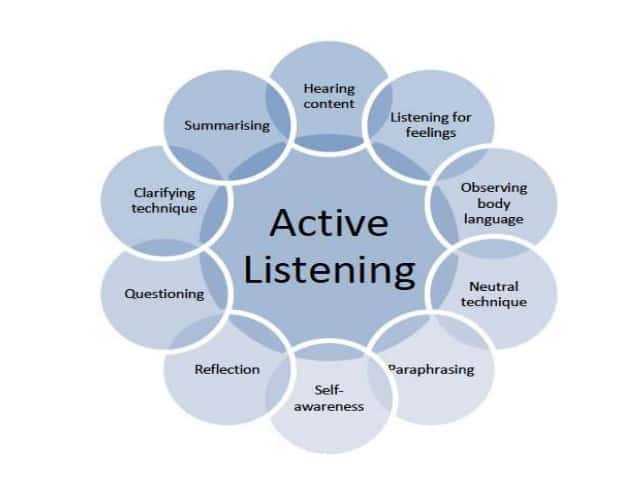
    This is where concepts like active listening and non-defensive listening come into play. In many cases, people just want to be heard. Communicating understanding can turn even the most negative of reviews into positives for your brand image. An experienced paper writer from EssayPro, for example, uses the written word to defend a position. This is accomplished by demonstrating authority and understanding of the topic, not by belittling or devaluing opposing views. There is much to be learned from this concept when responding in writing to a bad online review.

    active listening

    Extract and Address Pain Points

    Even if the complaint is unwarranted and completely untrue, your job is not to return volley, but to respond with a workable solution. In many cases, the complaint stems from the same list of pain points that a specific product or service exists to solve. If it were any other way, odds are the negatives cited in the review wouldn’t even be part of the argument.

    This presents a great opportunity to address the pain points in a real-life scenario and demonstrate the brand’s ability to remedy them.  Quite often, the real problem goes back to the previous complaint of not really being heard. Being able to extract the pain points – whether mentioned or implied – demonstrates a clear understanding of the customer’s needs and can also turn a negative review into a positive marketing tool.

    Be the Grown-Up

    A majority of negative reviewers use exaggerations, embellishments, and overwrought sentiments to add emphasis to their arguments. When this happens, try to understand a few things:

    1. Most readers pick up on how extreme the scenario looks on paper and take the details with a grain of salt.
    2. Readers hone in on negative reviews more often for entertainment than information.
    3. If the complaint is not part of a pattern, it is understood by most people to be largely baseless.

    Given that most readers are more rational in their assessment of a bad review than the person who posted it, your response should also be assessed rationally. Getting defensive and demoralizing the complainant will only make you look like the bully. In many ways, it also lends far more justification to the complaint than is deserved.

    Sometimes, the best policy is to simply ignore more volatile complaints or reach out to the complainant in private. A diplomatic public response might be warranted, in some cases, but every situation is different. Be pragmatic and responsible in your approach and never, ever become defensive.

    Apologize…Even If You Know You’re Right

    This is where your brand’s name can really shine. People like to feel as though the brands with which they engage understand them. Just reaching out to a negative reviewer in a meaningful way can help build trust in the brand.

    apologize

    Shy away from solutions that include free stuff, coupons, or static apologies. Never use words like “but” or “if” in an apology. Those words only serve to escalate the problem. Always assume responsibility and offer a solution. Even if you are convinced that the complainant is in the wrong, apologize and be sincere.

    Keep in mind that consumers will side with other consumers faster than they will with a brand. Don’t admit to anything, don’t offer a defence; just apologize. It gives the moral high ground to the brand and heightens perception of the brand with the reader.

    Lastly, any response to a negative review should include an attempt to fix the problem. You can even go so far as to ask the complainant what you can do or what you should do in the future to avoid the problem. Get the audience involved in the solution. Listen, and implement changes as needed and apologize in earnest. Doing these things shows commitment to quality, brand perception, customer relationships and a desire to continually improve.

    Top 7 Finest VR Fitness Games for a Total Body Workout

    0

    With the onset of the new year, many people are probably planning to get back in shape after gaining pounds in 2018. But let’s be honest, exercising can be tedious. No matter how much you want to achieve your goal, there are really some days you won’t even bother visiting the gym – even though you paid for an expensive membership.

    Well, you don’t always need to go out to work a sweat. And we’re not talking about building your home gym, but solely with the use of VR gaming! Virtual reality is more than just a portal to a different realm. There are also a couple of VR games and VR Company that will help you shed some pounds.

    It might sound odd for some, but virtual reality is a fun way to get fit. In fact, the Virtual Reality Institute of Health and Exercise has come up with a list of VR experiences and measure the number of calories burned while playing. They also compared the following VR games with some traditional exercises based on the MET score. You can discover more at Vivotion official blog.

    If you have considered working out as a daunting task for many years, these VR Fitness Games will change the game. So, grab a towel and a bottle of water and let’s jump right in!


    1. Thrill of the Fight

    Let’s start with the most calorie intense VR game so far. The Thrill of the Fight is a boxing game that will keep you moving. Just a heads up, this game doesn’t feature high-quality graphics, unlike others. But don’t get pulled off because it’s efficient is working a sweat!

    Playing this game is almost like sprinting in real life. Within 30 minutes of the Thrill of the Fight, you can burn as much as 450 calories or more. By throwing punches and landing jabs on your opponent, your upper body will be put to work, and your abs might come out in no time!


    2. VirZOOM Arcade

    If you really want a virtual exercise experience, the VirZOOM Arcade is an excellent choice. This game is considered as the “world’s first and only VR bike,” and it’s exciting. It requires an actual exercise bike that features unique hand controls and triggers. It comes with eight gaming buttons and even has two heart-rate monitors.

    However, this isn’t your usual elliptical trainer. You won’t get bored pedalling all day because of its fun features. It would make you feel as if you’re riding a horse or tank, which get faster as you pedal.

    The VirZOOM Arcade will take you to an extraordinary biking adventure without having to get out of the door!


    3. Bitslap

    This game is pretty simple, but because of the intense movement it requires, it can be considered as a High-Intensity Interval Training (HIIT) workout. In Bitslap, all you need to do is hit the cubes in the correct sequence but since they appear quickly, you have to keep up. As you get your head in the game, you’ll find yourself reacting faster than you thought you could.

    Bitslap has an interval similar to what Crossfitters call “Tabata”. This type of exercise includes 20 seconds of hard work along with 10 seconds of rest – for a total of 4 minutes. With the rapid punching movements in this game, the upper body will be worked, and since you need to squat to reach for lower cubes, it will also target your lower body.


    4. Fastest Fist

    Another fun boxing game is the Fastest fist, wherein you get to a sparring partner that looks exactly like Bruce Lee. Although this game doesn’t involve the use of nun-chucks, it will surely make you move all around. According to the Virtual Reality Institute of Health and Exercise, playing this game is comparable to playing tennis.

    For your warm up, it will purely be shadowboxing, then eventually landing on those jabs, hooks, and other punches. This is an excellent form of upper body conditioning, and 30 minutes of playing can burn around 180-240 calories.


    5. Hotsquat

    The Hotsquat is one of the few VR fitness games that doesn’t focus on working on your cardio. Instead, it’s much more challenging and painful, I guess. The setting of this game is inside a gym, but it doesn’t have to do anything with the game.

    The walls of the gym have little holes wherein you have to squat down until your body fit into them and wait until you get to the other end. Once you fail to fit inside the hole or hold the squat, the entire gym will collapse on top of you. That means you’ll never have to skip leg day with the Hotsquat!


    6. Audioshield

    For those who aren’t a fan of boxing and fighting games, this one might work for you. Audioshield is similar to Guitar Hero, but you need to use your upper body to beat the orbs flying toward you.

    You can defend yourself from the orbs by punching or blocking them according to their colour. This efficient in working your upper body, but you can also do it while holding a squat or lounge for a total body exercise. What makes this game even more fun is that you get to choose your own song, as it can come from your own library or even on YouTube.


    7. Holopoint

    Holopoint is a bow and arrow shooting game which many compare to the training in the Hunger Games. Beware: This game is very addicting. That’s because it isn’t simple shooting arrows to your target. Instead, the targets, which include blue holographic demons and samurais, shoot back every time you hit them.

    Take note that the shoot fast and they can shoot all over the place so you have to be quick or else you’re out. Playing this game is an excellent workout for the upper body, and its movement is equivalent to swimming laps.

    Although some might not agree with the concept of working out using virtual reality, it’s still a great option for those who want to kickstart their fitness journey at home. Despite the absence of any gym equipment, these VR fitness games are will still get your body moving and keep the heart rate elevated.

    What to Know About Marketing an App on Instagram

    When you create an app, the competition you face is fierce. As with any other product or service, success requires a marketing plan.

    “Treat your app like you would any other business,” writes a blogger for Buildfire. “Come up with a marketing campaign that generates money.”

    More than likely, Instagram is going to be a big part of that marketing plan. Since its launch in 2008, Instagram has become one of the most widely used and engaging social platforms. According to research cited on Hubspot, Instagram has more than 800 million active monthly users. 60 per cent of adults online use Instagram and there are 25 million business profiles on the site.

    Despite how prolific Instagram is in terms of connecting with potential customers and creating marketing, it’s different from other social platforms and it requires a distinctive approach.

    If you’re thinking about marketing an app on Instagram, the following are some general and specific things to be aware of.

    Optimizing Your Instagram Business Profile

    First things first. If you’re going to be marketing an app on Instagram you need to create and optimize your profile. You’ll have to choose an image that’s in line with the marketing and branding you’re implementing elsewhere.

    Your logo is a good option, but since you’re marketing an app you could also use a captivating image from within your app.

    Your bio has to be short and sweet, so let people know what your app is and why they should use it and love it. You don’t have to optimize for keywords here, because you can’t search Instagram bios.

    What you should do, however, is encourage your profile visitors to take a certain action. Maybe you send them to a landing page with more information about your app, or perhaps you encourage them to go and download the app. The bio is the only place where you can add a clickable link on Instagram, so make good use of it.

    Influencer Marketing

    If you are going to be marketing on Instagram, you’ll need to get familiar with influencers. People go to Instagram to see what the people they follow are doing and using. Instagram users with big followings are often described as influencers.

    Consumers are much more likely to make a purchase or download an app if someone they follow on social media recommends it.

    There are different ways to connect with influencers. You can reach out to them directly in their direct messages, but this can be tough to get their attention, especially if they have tons of followers. Another option is to go through a service that manages the connections between influencers and people who want to market their products or services.

    Using Hashtags

    Along with learning more about influencer marketing and reach out to influencers, if you’re marketing on Instagram you’re going to have to learn hashtag best practices. You probably already know the general elements of what hashtags are and how to use them, but they’re one of the most critical parts of your Instagram campaigns and marketing efforts.

    Every post on Instagram should have at least one hashtag, but you’re usually going to have more than that. Include a mix of short- and long-tail hashtags, and don’t post your hashtags in the caption. Instead, add them to the comments so that people will be able to see your pictures in their newsfeed without the clutter. Include one of your brand’s hashtags in every post for consistency.

    Instagram Ads

    While Instagram can be great for organic marketing, their paid ad options are fantastic as well. There are two types of Instagram ads. One is an image ad, and the other option are video ads. Image-based ads look a lot like an organic Instagram post, while video ads can go for up to 30 seconds and include sounds as well as the visual elements.

    Either option can be used for app installs. Instagram ads include different CTA options, including one for “Install Now.”

    Instagram ads are good for driving app installs for a few different reasons. First, since they are native-style they really seamlessly blend into people’s feeds and they might not even initially realize they’re looking at an add. Instagram ads also perform well—often better than Facebook ads in terms of getting clicks.

    Is this all you need to know about marketing an app on Instagram? No, but it can help you get started and then you can explore more options and see all of the opportunities and possibilities available through this platform.

    Choose Wisely a Home Remote Temperature Monitoring System

    0

    Home temperature is essential for the safety and comfort of your family. Maintaining and monitoring temperature in office also enhances the healthy environment and protect you from any allergies you have. If you are at home and you have got your own little ones, you must have to monitor the temperature of the room or home, so it can prevent them from any serious damages. Not only that, it has the advantage of keeping your home and desired temperature while you are outside and about to reach home. There are lots of systems are available in the market to monitor home remote temperatures such as wireless, WiFi operated and many more. We would tell you here, how to select a home remote temperature monitoring system, but you must visit the Temperature Sensei, since they provide all the pros and cons of all the latest and popular home temperature monitors. You can compare the multiple systems there and can directly shop them from the selling websites.


    However, there are a lot of other reasons to monitor a home’s temperature:

    • Prevent any foods from spoiling.
    • It helps to prevent water pipes from bursting.
    • To protect expensive wines in a wine cellar.
    • To prepare a vacation home before your arrival.
    • Adjust temperature remotely when there is extreme weather outside.
    • It can provide a safe temperature for kennels, barns and aquariums.


    How Home Remote Temperature Monitoring System Works

    Home temperature monitoring systems use the digital microsensors to read the indoor temperature of the home and they also identify the humidity by its humidity sensing technology. The owner of the home can have access to the information via the remote thermostat and the main control panel by phone or internet. By the sensors, these temperature monitors notify or alert the owner if the indoor temperature exceeds the pre-programmed range (usually 45⁰ F – 85⁰ F).


    Different Types of Temperature Monitors and Alerts

    All the home temperature monitoring services provide the same basic functions, but there are some additional features are added which differentiate the devices from each other. There are several temperature monitoring and alerts available, some devices nit only sense the temperature but also adjust it. Some of the advanced devices also give a whole temperature history. The main types are:

    • Hard-wired sensors
    • Wireless sensors
    • Pre-programmed temperature ranges according to homeowner’s need.
    • Home remote temperature sensors to set and get the temp back into the desirable range.
    • Some provide the feature where you can track the whole history of temperature


    How to Choose the Top Best Home Temperature Monitoring System

    Selecting a best home temperature monitor for your home or office is very tricky. Choosing it is mainly depending on the individual preference. The best home remote temperature monitor system is that, which fit your family, property, office, and valuable in your household. If your house has any Home Security system, then you should choose a system which can be connected on the former. Before selecting a home temperature monitor, ask yourself these questions.

    • Do I need internet supported system to get a notification on phone?
    • Do I need a system that automatically adjusts the temperature automatically?
    • Do I want to set range according to my specification or let the machine do it?
    • Do I need a system that can work for 24X7?


    Final Verdict:

    So with this guidance, you can wisely choose the temperature system according to your needs for your home. And in further, if you want to check which brand is best suited for you then you must visit Temperature Sensei, a specially designed and dedicated site for the temperature monitor systems.

    iOS App Development Trends to Keep an Eye Out for This Year

    No one can deny that evolving technology has consistently introduced new growth and improvements to the world of mobile platforms. Case in point: augmented reality, virtual reality, and the Internet of Things (IoT) — all of which are expected to usher as sweeping changes in how mobile apps get developed, no matter which OS is involved. Besides that, the blending of such technologies is further scheduled to enable developers to create next-generation mobile apps that are capable of delivering more than previously imagined.

    Moreover, while we are here let’s discuss how iOS is a leading name in the market? That’s because Apple has ensured it serves as the quintessence of innovation. So, today, let’s visit some of the most popular technology trends that are set to shape the future of iOS app development.


    IoT

    Research expects that in 2020, the world will have nearly 31 billion IoT devices, with the figure expected to further increase by almost 2.5 times to more 75 billion by the end of 2025. So, it makes sense that iOS has also thrown its hat in the ring that is the development of IoT-based apps. Apple has already launched HomeKit — an offering aimed at encouraging both IoT app development as well as home automation.


    Artificial intelligence

    At this point, artificial intelligence is so prevalent that it barely counts as news. However, what Apple and iOS app developers are doing with it remains an interesting point of discussion. Interestingly both, App and developers, have already been experimenting the opportunities proffered by the union of Siri with artificial intelligence. Also as far as iOS apps go, if they get integrated with Siri, it is possible to ensure they are available in the shortcut app section with the Sirikit. Such an integration stands to help users quickly access an app’s features via Siri. Oh, and also watch out for WatchOS apps integrated with Siri, because trust us when we say this — they are coming!


    AR and VR

    With both AR and VR having established themselves as forces to be reckoned with, it isn’t surprising to see Apple strive to leverage them too. E.g., the ARKit 2, which, other than AR apps, it also empowers iOS app developers to build apps with the ability to allow users to share their experience with others.


    Security

    It is of the utmost importance when it comes to mobile app development, and the popularity of its devices supports Apple’s focus. Apple has made App Transport Security (ATS) a mandate for all new apps to ensure their security. However, since the company is so dedicated to the protection, it brings in improved iterations of iOS every year that help users to rest further assured that their devices and data are impervious to attacks by hackers.


    Swift

    Swift 4 was released among much fanfare and continues to gain popularity among developers since it is easy to learn and makes it quite easy to develop simple apps. It is why, experts believe that the use of Swift for not just iOS, but also tvOS and macOS, will grow substantially over the next few years.


    Apple Pay

    Seeing how mobile wallets are an integral part of the digital experience today, Apple Pay offers unparalleled security. It is gaining more and more popularity with every passing day. Moreover, since it allows users to eliminate the need to save their debit/credit card details and gets supported by iPhones, iPads, Apple Watch, and MacBooks, experts expect a substantial hike in the number of Apple Pay integrations in the future.

    Such developments in the world of technology are a daily affair. It implies that businesses have to stay updated with the latest developments in the market. It is equally vital to hire a renowned custom ios app development company to make sure that your business iOS app incorporates all these trends and more to deliver the best experience to users!

    Using Social Media to Find Job Opportunities

    Given the prevalence of social media these days, and the ‘always on’ lifestyle favoured by many, it makes sense to use the power of social media to find a job, further your career and network with others.

    One work experience student managed to combine all of those when he was asked by Southern Rail to manage their social media (BBC News, 11 July 2017). But for the majority of people, it’s not quite that simple.

    Social media is much more than a place to chat with your friends now, even if it has its roots in the messenger services of 20 years ago. Freelancers and entrepreneurs have used the likes of Facebook, Twitter and LinkedIn to promote themselves and their portfolios for years. Brands have also started to share job opportunities, ask for input from their followers, and react to criticism and praise shared on the various platforms. LinkedIn allows clients to approach job seekers directly, while services such as Twitter and Facebook can serve to increase the number of people aware of opportunities when a company is hiring.


    The CV is not dead

    If you’re looking for a new job, you should still (and first) have an up-to-date CV. This can then be shared with interested parties who may have been in contact via social media. LinkedIn and online job sites have largely replaced the traditionally printed advertisement, and increasingly, job seekers are applying directly to those companies they would like to work for rather than going through an agency.

    For professionals, LinkedIn is almost de rigeur, as at that level, a social media check is to be expected as part of the application process in the same way as references are routinely taken. Adding your LinkedIn profile link to your other social media accounts allows potential employers to easily access it, plus it indicates that you’re seriously job hunting and open to interview requests. Linking your actual CV to your social media may not be so wise, given that it contains your contact information and probably your address too. But by all means, add your social media handles to your CV. It shows you have nothing to hide from employers, reputation-wise.


    Followers can count

    Using social media to follow organisations where you might wish to work can increase your chances of seeing the right thing at the right time. The key is to remain professional, as the Guardian points out, even on informal social media such as Facebook and Twitter. Facebook is the cornerstone of many people’s social media use, and increasingly companies are using it to advertise their vacancies as well as promote their brand. The problem with this approach is that many people use Facebook very informally, to keep in touch with friends and family, and so it may not be a suitable platform for everyone to use for job hunting.


    Online search

    Social media can also help find suitable opportunities, simply through a standard keyword search. Job seekers looking to see who is tweeting or posting about vacancies in their area of interest can quickly pull up a search of the most popular or most recent posts using any given hashtag. Likewise, recruiters can search for potential employees in the same way, so if you’re interested in finding work in a particular field, you should consider posting about this using suitable hashtags, following companies in the location or field and even engaging with them by replying to their tweets or posts.


    Use the correct privacy settings

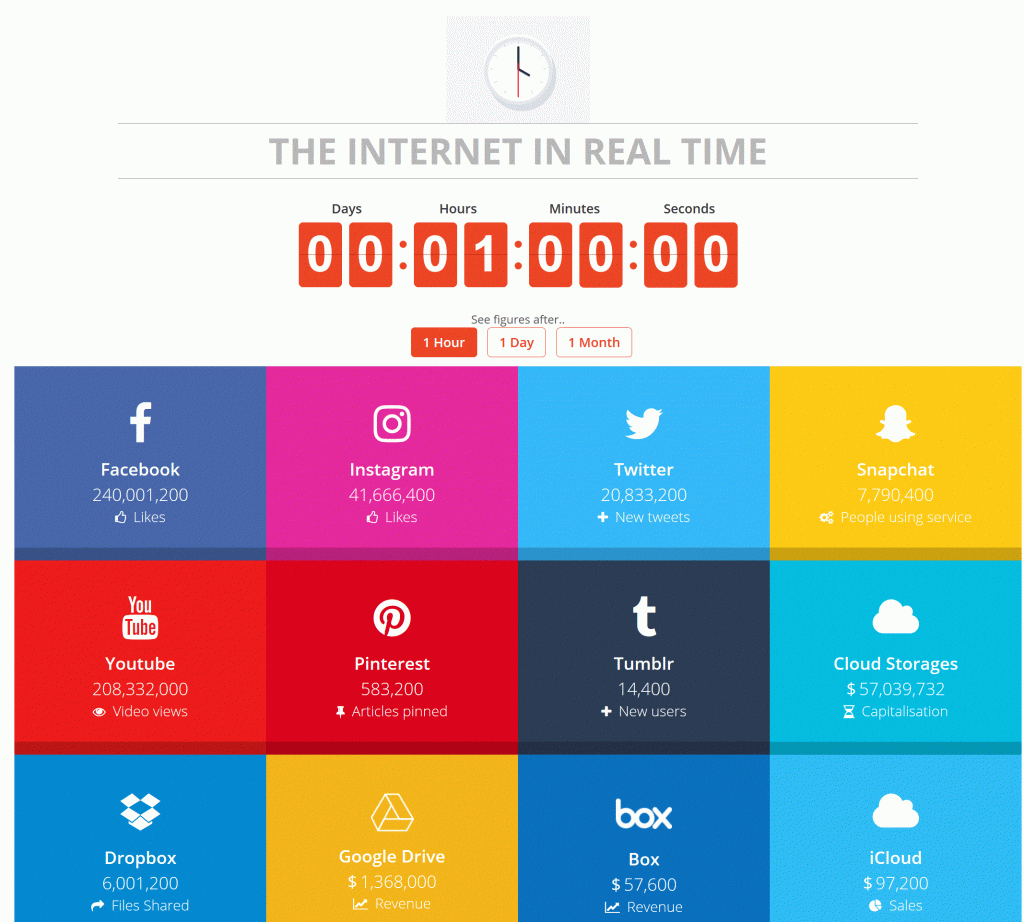
    If you think your Facebook account may be a bit too spicy for your future career prospects, you could either change your settings so that only your closest circle see the full feed, or set up a completely new account just for your job hunting efforts. Research from betting sites shows that even with 240 million likes an hour on Facebook, it’s more or less the law of the internet that the one colourful post you thought you had buried or deleted will resurface to smack you in the face mid-interview. Using Facebook Lists is a good way to separate your private and professional contacts. That way, you can customise the settings to the list – and ensure that your professional contacts remain oblivious to that boozy party photo from five years ago.


    Use your skills

    If you are looking for work in any area of the media or IT, it is sensible to showcase your skills using social media. Blogs, vlogs, Instagram, YouTube and other platforms can all be used to show off a portfolio of work. If you are between jobs, then freelance gig economy platforms such as Fiverr and Upwork may also be useful in keeping your hand in while searching for a new job as well as giving up-to-date feedback on the quality of your work.


    Research is key

    Social media is a great research tool. LinkedIn can be used to unobtrusively scope out companies, follow their key staff and keep up with industry trends. Hashtag searches and hashtag following will ensure that posts with the given tag are displayed in your feed. This will save hours of searching by bringing relevant posts to you but bear in mind that some platforms behave differently on the web version compared to the app. You may also find that following hashtag brings useful articles on job hunting as well as information on your preferred companies.


    It can be a slow burner

    Reputation building and networking can take a while, but at least it’s now possible to network remotely rather than relying on the ‘old school tie’ or the people your father played golf with. Making yourself known to the influencers in the companies you are targeting doesn’t happen overnight, but the truly savvy job seekers will start building their career path long before they actually leave their present role if they have a chance. Or they will choose to take a more senior role for a limited time, such as a secondment or fixed term contract, in order to gain experience as a stepping stone to where they really want to be.


    Vary your approach

    TheMuse has a long list of things that successful job seekers have done on social media in order to find a job. Given that recruitment professionals are more likely than ever to check out candidates’ social profiles before offering an interview, anything that you can do to improve your chances of being selected has to be good. This list covers standard things like cleansing your social media of dodgy photos and posts and using appropriate privacy filters, but also more unusual ways to be noticed, such as sharing posts, participating in ‘tweetups’, or Twitter chats, and creating Instagram or Pinterest accounts for interview outfits, CV layouts or useful career advice you learn along the way.


    The right to be forgotten

    Talking of removing dodgy photos, if you fear your social media presence is that dire, a reputation management company might be able to help. These organisations typically try to raise positive search results on any given term up to the rankings, while burying negative press. This can include submitting takedown requests for plagiarised or libellous content or submitting a right to be forgotten request as well as thoroughly checking all social media. This should, however, be the absolute last resort for any job seeker as it is an ethically grey area.

    Using social media sensibly to network and find job opportunities will allow you to maximise your chances of career progression and also interact with a wide range of people along the way. Provided your social media profiles are clean, professional and current, being active on social media should be a bonus to your job search, not a hindrance.

    Content Marketing: How to Measure Its Success

    0

    For starters, let’s define what makes a successful content marketing.

    Successful content marketing supports your marketing and business goals. If you manage to accomplish your goals, like getting new clients, increasing sales or building brand awareness, with the help of content marketing, it means that you have the right strategy.

    On the other side, if you notice that your content marketing isn’t effective enough, it’s crucial to measure your content effort to discover what’s not working. Is your copy persuasive enough? Does your blog cover relevant topics? Are your buttons clickable enough?

    Therefore, go through following a four-step framework that contains important metrics which define the success of your content marketing and put it on the test.


    1. Discovery

    The first metric for checking the effectiveness of your content is to determine its discoverability. When your content is easy to find, more people have a chance to see it and interact with it. If not, then you need to work on the visibility of your content efforts and help your readers find it without a hitch.

    There are four metrics you should keep an eye to – Impressions, site visitors, Click-Through Rate, and Clicks.

    – Impressions show you the visibility of your content on search engine results pages. This metric brings in connection the relevancy of your content to searched keywords.

    – Site visitors are the people who discovered and came to your website. Make sure you have a constant flow of new visitors and keep a balance between unique visitors and repeated ones.

    – Click-Through Rate is a figure you get dividing total clicks by total impressions for a certain keyword. This metric helps you track the performance of your content.

    – Clicks reveal how often the users click to visit your site when they get search results. This metric shows how appealing your content is to the audience.


    2. Engagement

    When a visitor comes to your site, it’s time to measure engagement to determine the efficiency of your content. The longer the visitors stay on your site and browse other pages the better it is for engagement. In this phase, you should track Time on Page and Bounce Rates metrics.

    – Time on Page indicates how much time the user spends on a page. Should you notice that this metric is low on a page important for your business goal, find a way to bring traffic to it.

    – Bounce Rate shows that a visitor came to a page and stayed there without browsing through pages. Try to minimize Bounce Rate on your content pages.


    3. Conversion

    Conversions are the crucial element of your content measurement because they indicate the performance of your content, i.e., whether you managed to achieve the planned goals. Conversion actions allow you to connect with your visitors further. For instance, “Sign up to newsletter” is the most common conversion action on a website.

    According to australian essay writers, it’s crucial to track conversion and make necessary changes if you notice that some elements don’t deliver good results.

    Therefore, make sure you keep track of everything, as well as traffic sources and universal event tracking. Also, determine your conversion goals in the web analytics platforms and assign an approximated dollar amount to every conversion goal. Assign higher values for more difficult conversions.

    Over the time as you analyze your reports, you’ll gain significant insights, like what type of content drives more site revenue, what topics are popular or what type of CTA performs best. This exact data will help you improve your content marketing strategy and achieve better results.


    4. Social share

    Social sharing is a sign that visitors like a piece of content and that they consider it worthy to share it with their family, friends, and acquaintances. It also shows the effectiveness of your content, so this is a metric you should pay attention to, especially to following things:

    – Shares include re-grams, retweets, reshares and re-pins. The higher this number is, the more valuable your content is, and people are more likely to continue spreading the word about your brand. Use tools, such as Hootsuite to keep track of all social shares.

    – Comments on the website or social media posts are a great indicator that your content resonates with the audience. So, any comment expressing compliments, agreements or disagreements is a good sign because it evokes some emotions and interest.

    – Follower growth is also an indicator that more and more people are interested in what you have to say, so don’t forget to keep an eye on this figure.


    Final thoughts

    Tracking your content marketing efforts can be overwhelming. However, this framework with precise metrics will guide you through the entire process, and you’ll be able to transform your content performance, achieving all your business goals.

    Best Graphic Cards to Buy in 2019 – Best Graphic Cards in the Market

    0

    The GPU industry last year was a roller coaster. The first few months of 2018 was the time when graphics cards prices were literally through the roof because of the crypto mining craze. Crypto-miners had wiped out graphics card shelves faster than all the combined GPU manufacturers can produce.

    The other half was when new, more powerful graphics cards were introduced, specifically, NVIDIA’s Turing RTX and AMD’s Radeon RX 590, Vega 56, and Vega 64. But this didn’t put the previous generations far behind in terms of performance. This is why the gaming community has got more graphics cards to choose from now than ever.


    Breaking the GPU Jargon

    Let’s clear out some terms and jargons to better understand each graphics card’s capability and performance.


    Clock Speed

    This represents the speed of the GPU core inside the graphics card. It’s is measured in MHz and does not determine the relative performance of the card. Overclocking the card does provide a free bonus performance. But this has to be done right as it could risk damaging the graphics card if done incorrectly.


    VRAM

    The dedicated memory inside the graphics card. Similar to RAM or Random Access Memory, more Video Random Access Memory or VRAM means you get better texture quality in higher resolutions.


    GDDR5 and HBM

    GDDR5 or Graphics Double Data Rate Type 5SGRAM (Synchronous Dynamic Random Access Memory) is the modern standard form of VRAM. It’s capable of attaining higher clock speeds but consumes more power and is physically larger than HBM.

    HBM or High Bandwidth Memory is the newer form of VRAM. It can be stacked to achieve a smaller form while boosting performance by allowing higher bandwidth at lower clock speeds. It also consumes lesser power compared to GDDR5.


    GDDR5X vs GDDR6

    The GDDR5X (Graphics Double Data Rate Type 5X SGRAM) is the newer version of GDDR5. It has the same speed modes at which the GDDR5 operates but its third-tier speed mode is what makes it faster. In fact, this third-tier speed mode is reported to have twice the data transfer rate. It is also commonly found in high-tiered cards.


    GDDR6

    The GRRD6 (Graphics Double Data Rate Type 6) is the successor of both GDDR5 and GDDR5X. It offers faster memory speeds and high bandwidth with even lower power consumption. This is aimed towards high-end gaming and is specifically present in NVIDIA’s Turing (RTX-series) graphics cards.


    HBM2

    HBM2 or High Bandwidth Memory 2 is the newer version of HBM. It’s basically an upgrade of the HBM with its higher bandwidth and higher memory speed.


    Questions to Ask To Make the Right Pick

    To make the right choice, your selection should be based on these 3 questions:


    How Much Are You Willing to Pay?

    On average, your budget ultimately has the say. If budget isn’t an issue, get the Titan RTX. The performance is going to be worth it, especially if you’re the competitive type.

    If you can’t get a Titan RTX or even an RTX 2080 Ti, there are numerous alternatives you can choose from. And we’ll cover them one by one in the review section below.


    What is Your Preferred Gaming Screen Resolution?

    1080p resolution is the most popular choice for gamers, and a GTX 1050 Ti should be enough to push decent frame rates at 1080p resolution on high settings.

    But if you’re looking at gaming on a widescreen or 4K monitor, avoid low- and mid-range graphics cards and go straight for premium cards. All the RTX cards, as well as the GTX 1070 Ti, GTX 1080 and the GTX 1080 Ti version, are perfect choices.


    Other Things Worth Considering

    Size

    Like computer cases, graphics cards come a variety of shapes and sizes. There are cards with 3 cooling fans and other cards of the same model with only 1 fan, specifically, mini and reference cards.

    Because of this, it’s important to check the dimensions ahead to make sure the card will fit in just fine.


    TDP or Thermal Design Power

    TDP is the amount of power (watts) needed to dissipate the heat generated by a graphics card under normal operation. Knowing this allows you to choose the right power supply as well as give you an idea of how many case fans you need to dissipate the heat from inside the case efficiently.


    Power Connectors

    Some graphics cards require an eight-pin connector while some only require six-pin connectors. Moreover, there also are graphics cards that have 2x eight-pin and 2x six-pin connectors. If your power supply does not have the supplemental connectors, an upgrade will be essential.


    Best Graphics Cards in 2019


    Graphics Card Clock Speed VRAM TDP (Thermal Design Power) Power Connectors
    Best Overall: Titan RTX 1350 MHz – 1770 MHz 24 GB GDDR6 280 Watts 8+8pin
    Best AMD GPU: Radeon RX Vega 64 1247 MHz – 1546 MHz 8GB HBM2 295 Watts 8+8pin
    Best NVIDIA GPU: RTX 2080 Ti 1350 MHz – 1545 MHz 11GB GDDR6 250 Watts 8+8pin
    Best 1440p GPU: RTX 2060 1365 MHz – 1680 MHz 6GB GDDR6 160 Watts 8-pin
    Best 1080p GPU: GTX 1060 1506 MHz – 1708 MHz 6GB GDDR5/X 120 Watts 6-pin

    1. Best Overall: Titan RTX

    This is currently the best graphics card in the market.

    This monstrous graphics card holds a sheer power that focuses on data science, content creation tasks, and AI– not on gaming. But even though it’s specifically made for content creators, deep learning, CAD, and other professional tasks, you can still use this for gaming. In fact, it’s so powerful that it can run games smoothly even at 8K resolution, not just 4K.

    It’s just that that amount of money you’d spend will be better off investing in graphics cards specifically dedicated to gaming, such as an RTX 2080 Ti.


    2. Best AMD GPU: Radeon RX Vega 64

    The RX Vega 64 is AMD’s fastest consumer graphics card. This card can handle modern AAA games at 4K resolution without any drop in performance.

    A noticeable downside is that it generates more heat. This means it also produces more noise to keep the temperatures low. So, if you’re going to consider this option, make sure you get the aftermarket version of the Vega 64 like the Asus Strix model as this does a pretty good job at keeping this beast cool.


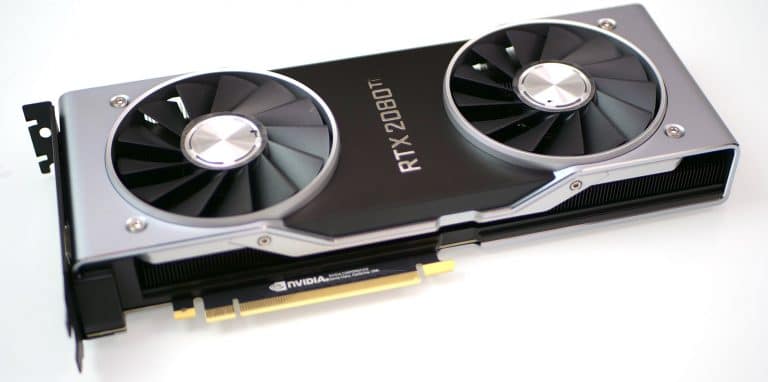
    3. Best NVIDIA GPU: RTX 2080 Ti

    After the release of the powerful GTX, 1080 Ti comes to the Nvidia GeForce RTX 2080 Ti. This is currently one of the largest consumer GPU’s ever manufactured. It also features the new Turing RTX technology (TU102) that was reported to be 60% faster than the GTX 1080 Ti’s Pascal technology (GP102).

    Essentially, this has the new Ray-tracing technology for a more immersive and surreal graphics experience when playing games. Just make sure you upgrade your gaming monitor as this card works best at 4K resolution. If the Titan RTX is too expensive for you, you wouldn’t go wrong with the RTX 2080 Ti.

    4. Best 1440p GPU: RTX 2060

    A new entry in the 1440p territory is Nvidia’s RTX 2060 graphics card. This graphics card is potent enough to deliver more frames at 1440p resolution than a GTX 1070 Ti for a lot less. Plus, it runs the latest Turing RTX feature, Ray-Tracing technology, for a more immersive gaming experience.


    5. Best 1080p GPU: GTX 1060

    The GTX 1060 graphics card offers a premium experience at 1080p resolution. In fact, it’s very capable in the 1080p territory that you can pump the resolution up to 1440p and still get decent frames– as long as you sacrifice a little of the quality for performance.

    Compared to its competitor, RX 580, this uses 50W less power and is quieter. It may also be 2GB short of VRAM than the RX 580 but that’s really not a concern in gaming, specifically at 1080p resolution.


    Final Words

    When buying a graphics card, it’s important you choose according to what you can afford and what you need. So, with all of these laid out, you should have the best graphics card for you on your next purchase.