AI Agent Development Cost in 2026: Budget, Features & Implementation Factors
AI agent development costs in 2026 typically range from $30,000 for a basic MVP to more than $300,000 for enterprise-grade autonomous systems. The final budget depends on AI model complexity, integrations, memory capabilities, infrastructure scale, security requirements, and workflow automation depth. For a strategic perspective on implementation, see our guide on building an agentic AI strategy.
Businesses across healthcare, logistics, finance, retail, and education increasingly adopt AI agents to automate operations, improve decision-making, reduce manual workloads, and accelerate customer support — a domain where AI chatbots for websites are making a significant impact. Many organizations also work with rag development companies to improve contextual accuracy and connect AI systems with internal knowledge bases and operational data.
This guide explains how much AI agent development costs in 2026, which factors influence pricing, what features increase implementation budgets, and how businesses approach AI adoption strategically.
What Is an AI Agent?
AI agents are software systems that are able to collect information, make decisions based on that information, perform tasks on their own, and interact with users.
AI agents are different from traditional chatbots in that they do not just follow a pre-defined flow, but are also able to analyze the context of interactions with users, search for and pull in relevant data from multiple sources, think through complex workflows, and carry out multi-step tasks in many different systems.
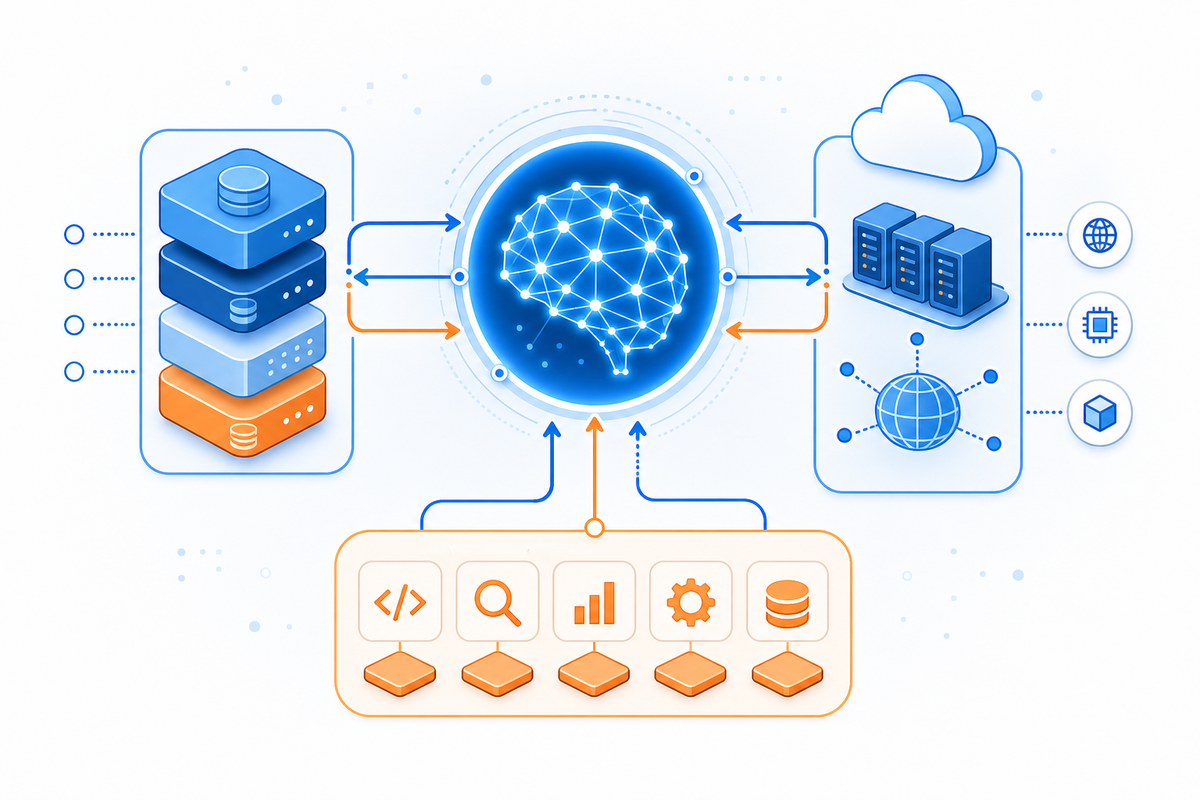
Modern AI agents often combine:
- Large language models
- Workflow orchestration systems
- Retrieval infrastructure
- Vector databases
- APIs and integrations
- Long-term memory systems
- Automation pipelines
With more companies adopting/artificial intelligence methods to accomplish customer service assistance (CSAs), operations of sales
Intelligent agents appear to have transitioned from “experimental” tools to those used in daily operations by companies because of the rapid growth.
Why Businesses Invest in AI Agents
Automation of repetitive tasks is one reason companies employ AI agents to help improve operational efficiency.
Through the automation of many manual workflows, businesses can scale their operations at lower cost. Employees typically spend hours fulfilling repetitive requests, processing information, summarizing report results, updating systems, and managing approval processes.
AI technology is an additional way businesses can automate the customer support processes they currently use. AI technology enables customers to receive 24/7 assistance, find answers to common questions, escalate issues, and reduce response times while avoiding additional staff.
Scalability is another factor that affects scalability. AI agents enable organizations to process larger quantities of operational volume with proportionate staffing cost increases.
Decision-making speed is another area where organizations are using AI systems. AI agents can analyze very large datasets, summarize them, detect deviation from expectations, and provide operational recommendations in seconds.
At this point, many organizations are defining the implementation of AI as a long-term competitive advantage, instead of as short-term automation efforts.
How Much Does AI Agent Development Cost in 2026?
The development costs of AI agents can vary based on the level of complexity of the system and the amount of supporting infrastructure needed to run it.
Typically a basic minimum viable product (MVP) will come in at approximately $30,000 to $60,000. Generally this type of solution will include conversational interfaces, limited automation workflows and very basic API integrations.
Mid-level AI agents have memory-based systems, analytics dashboards, retrieval infrastructure, and typically require budgets anywhere from $80,000 to $180,000.
Enterprise grade AI ecosystems (with multi-agent orchestration, autonomous workflows, private AI infrastructure, advanced security systems, and large-scale deployment) typically exceed $300,000.
Operational costs do not end once the AI agents are deployed. Businesses continue payment for infrastructure maintenance, prompt optimization, AI performance monitoring, retraining of models when needed, and scaling of computing resources based on demand.
What Factors Affect AI Agent Development Cost?
Several technical and operational factors directly influence implementation budgets.
AI model infrastructure
Choosing the right AI Model has a huge impact on Development and Operational costs.
Businesses that use public APIs like those from OpenAI, Anthropic, and Google benefit from getting rid of infrastructure complexity; however, they incur API costs as they continue to use the provider’s services.
Other companies that deploy their private or open-source models reap the benefits of better security and reduced asset dependency on other people, but have to spend more on building their infastructure and cloud resources.
Companies that choose to fine-tune their models will incur additional costs as they need to validate that the dataset is correct and the outputs produced are appropriate, while also maintaining a continual training environment.
Workflow complexity
Basic AI assistants are capable of carrying out a small number of jobs with a fixed workflow whereas sophisticated AI agents can execute their own actions autonomously, reason through issues dynamically, prioritize tasks according to stated criteria and co-ordinate across multiple systems. Significant development effort will be required in order to create complex orchestrated workflow.
Retrieval and memory systems
Contemporary AI agents use increasingly sophisticated memory-related systems to enhance both their overall response quality and their operational accuracy.
Persistent memory infrastructures consist of vector databases, retrieval pipelines, indexing systems and scalable storage architectures – without which, AI agents frequently provide incorrect or erroneous responses in relation to a company’s own information (as opposed to the general population).
Third-party integrations
Enterprise AI agents usually do not have their own independent operations. Most companies will need to use multiple apps and services in order to effectively use AI agents, such as CRM systems, ERP systems, ticket systems, payment processors, HR software, analytics platforms, and communications tools. This level of integration can add significant complexity into a project, which often results in delayed delivery times and increased costs.
Security and compliance
AI technology routinely handles sensitive operational and customer data. Healthcare companies may need to adhere to HIPAA regulations. Financial institutions usually utilize other encryption levels such as role based access control (RBAC), audit logs of activity, and infrastructure monitoring systems. Therefore, one of the largest category of expenses for enterprises developing AI will center on security engineering.
What Features Increase AI Agent Development Costs?
The complexity of implementing certain features can significantly increase.
The successful autonomous execution of workflows calls for orchestration systems that can enable/manage the dynamic logic of operations and perform multi-step, multi-agent decision-making.
The requirements for multiple agents to work together adds an additional layer of complexity because multiple AI systems will need to exchange information and coordinate activities.
Voice capabilities will also increase cost. The implementation of additional infrastructure and optimization will be required to support real-time speech recognition, support a variety of languages and regional dialects, synthesize audio and enable low-latency communications.
Advanced analytics represent another category of features that can add additional costs. Businesses are increasingly looking for their AI agents to generate operational insights, produce summaries and trends and provide support for strategic decision-making through dashboards and predictive reports.
Creating a specific user interface for each organization – especially in cases where an organization has created a multi-platform ecosystem (web, mobile, enterprise) – can again take time, resources and dedication.
What Technologies Are Used to Build AI Agents?
The modern AI agent consists of many different technologies that comprise a single operational ecosystem. The largest language model can assist with both natural language understanding and reasoning. For contextual retrieval and memory storage, vector databases such as Pinecone, Weaviate, and Chroma can supplement natural language processing and AI agents’ reasoning capabilities. Additionally, in the backend, many organisations use backend technology such as Python, Node.js, and Java, to facilitate API management, workflow orchestration/integration, and business logic.
The cloud-native infrastructure is still standard because all AI-based workloads require computing resource scalability. Many organisations are deploying to and/or managing their infrastructure using cloud services from AWS, Microsoft Azure, or Google Cloud.
Additionally, an increasing number of organisations are employing AI orchestration frameworks (e.g., LangChain, Semantic Kernel, CrewAI, AutoGen) to help simplify the coordination of workflows and communication across multiple AI agents.
Finally, the need for continuous evaluation, detection, logging and performance optimisation in monitoring an organisation’s AI infrastructure is becoming more significant; organisations need to ensure their AI systems are continuously running at optimal performance and are not producing any hallucinated results.
What Are the Main Stages of AI Agent Development?
Typically, a successful AI initiative evolves through a very structured process.
Business analysis is the first step in the implementation process. Teams look for operational bottlenecks, automation opportunities, target users and potential ROI.
The next step is an architecture plan. Engineers will define their infrastructure needs, develop a model of strategy, integrations and retrieval systems, and define security controls.
During the development phase, teams will develop APIs, orchestration systems, interfaces, memory infrastructure and AI pipelines. Additionally, at this stage, prompt engineering and contextual optimizations are also critical processes.
The testing phase is a critical phase of a project. Teams will evaluate the quality of responses generated by AI and measure the risk of hallucinations, scalability, latency and cybersecurity controls prior to deployment.
After an initiative has been deployed, businesses will provide continuous feedback based on usage patterns, workflow optimization, prompt improvements and infrastructure sizing based on operational requirements.
What Challenges Arise During AI Agent Development?
The implementation of AI poses several operational and technical risks.
The largest risk is that of hallucinations – the generation of false or inaccurate responses – so retrieval infrastructure or contextual grounding can help mitigate the risk significantly.
Scalability is another challenge presented by the use of AI as the workload associated with AI applications requires significant computing resources at times of peak operation.
Integrations are frequently complicated by legacy infrastructure, as many enterprise systems use fragmented environments and are based on outdated technology.
Just as important are governance and compliance. Organizations must ensure that AI produced outputs are secure, explainable, and compliant with the organization’s internal operational policies.
If employees distrust automated systems or are not properly trained and onboarded, then operational adoption may also be difficult.
Organizations typically use phased implementation, iterative delivery, and ongoing monitoring in order to mitigate these risks.
What Trends Will Shape AI Agent Development in 2026?
Multiple trends are still shaping the future of AI across various industries.
First is that companies are deploying specialized agents working together on workflows in multi-agent environments, replacing their previously isolated assistants.
Second is that retrieval-augmented generation (RAG) is now also part of the standard enterprise infrastructure as firms require the ability to create AI systems with context built from both external and internal data sources.
Another key trend is that voice-enabled interfaces are also becoming more popular, as accuracy of voice recognition technology is increasingly prevalent within enterprise use cases.
Finally, another major trend in relation to AI technologies being adopted by organizations today is that many organizations are moving from fully using public AI APIs to using private AI infrastructures via either hybrid deployments or self-hosted solutions for enhanced security and cost effectiveness.
The continued growth of autonomous workflows means that they will be used across Logistics, HealthCare, Finance, Customer Support/Call Centres and all Other Internal Teams.
Final Thoughts
Developing AI agents in 2026 is no longer simply about incorporating a chatbot onto your website. Businesses are now implementing smart systems that are able to reason, pull in context-based information, automate workflows, and support operational decision-making at scale.
The budget for implementing an AI agent ultimately depends on the level of complexity in the company’s infrastructure, the level of integration that exists, the level of workflow automation related to the industry’s compliance requirements, and finally, expected levels of scalability of the systems developed.
Typically, companies that take a strategic approach to adopting an AI agent will generally start with a well-defined minimum viable product (MVP), are able to validate the operational value of the AI agent early on within their organisation and then will gradually replicate those earlier AI agents throughout their organisation’s departments or workflows.
The overall architecture, retrieval architecture, scalable use of cloud-based technology, and continuous optimisation of both will be larger influences than anything else on whether or not a company will turn their investment into either an asset (AI agent) or a high-risk, high-cost (experimental project).
As enterprise-wide AI adoption continues to accelerate at an increasing rate through all areas of the world, organisations that invest into scalable components from these types of solutions today are setting themselves up for future long-term use of these technologies to improve operational efficiency or gain a competitive edge.